

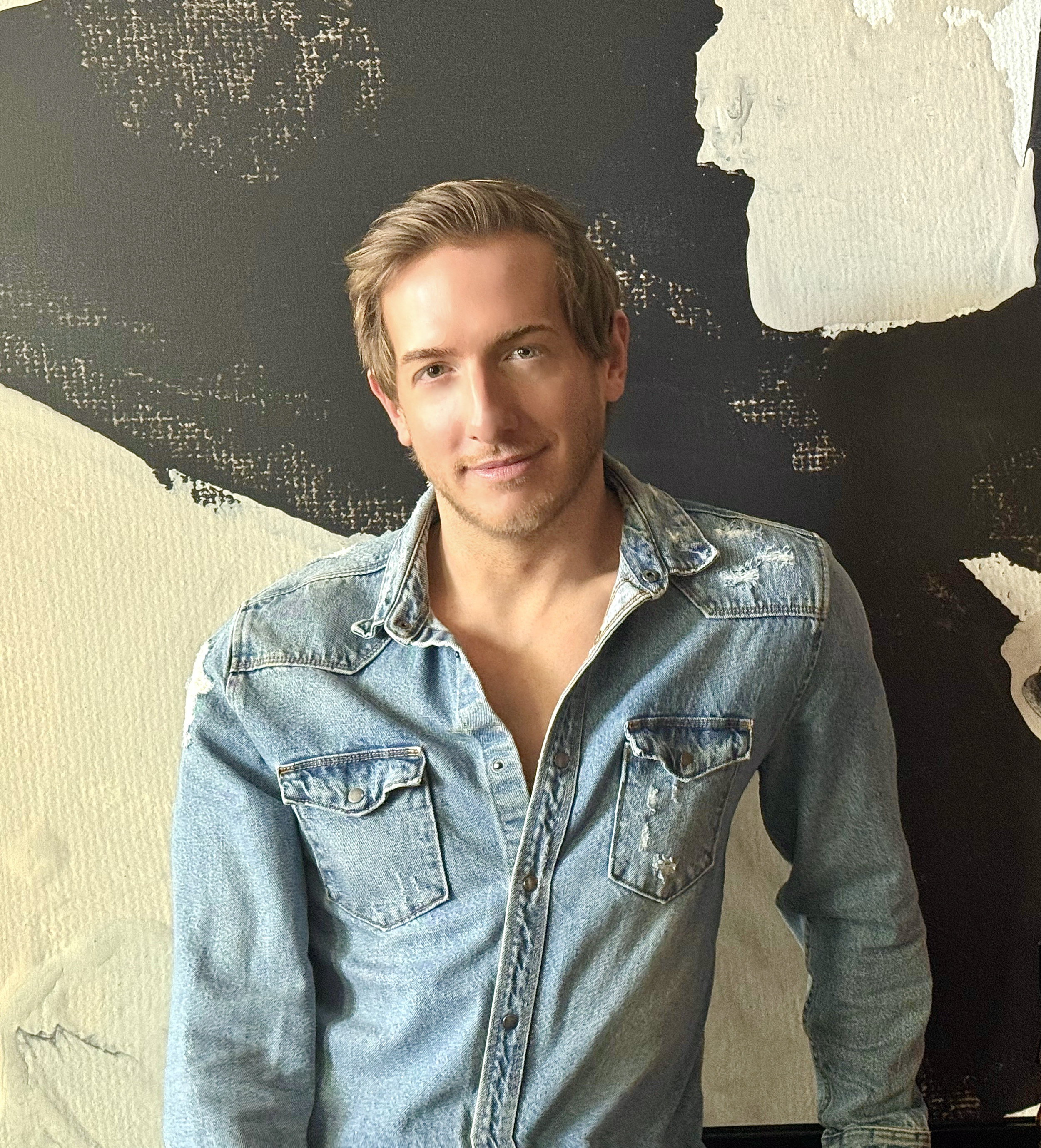

Dr. Casey Gamboni, PhD, LMFT (he/him/his)
I am a therapist, professor, researcher, and consultant.
I am also a client, student, and a friend of Dorothy.
My professional experience has spanned community clinics, academic institutions, and director level leadership, all grounded in a commitment to relational and culturally responsive care. Such experiences and environments have embedded the value of trauma informed care, anxiety and depression management, relationship exploration, and overcoming generational trauma.
My research and other writings have been published in numerous academic journals, magazines and textbooks. With public appearances ranging from Good Morning America, The Daily Mail, and The Wall Street Journal.
My Approach

-
Therapy, at its core, is a relationship. It’s one that is built on trust, safety, commitment, and curiosity. It doesn’t go past me that this unbiased relationship is one of the most unique you’ll have.
I value genuine connection before anything clinical. I want to know what your weekend looked like, what TV shows help you unwind, and what brings you comfort. From there, the work becomes a collaboration between your lived experience and my clinical perspective, moving at a pace that feels right for you.
I work from an integrative systemic lens, considering not only the individual in front of me but the relationships, histories, identities, and environments that shape your experience. My work is also grounded in trauma-informed care, with attention to safety and how past wounds show up in the present.
Whether you want to manage anxiety, strengthen relationships, or understand longstanding family patterns, we’ll work together to define what healing and change looks like for you. The work isn’t something I define alone. it begins with your curiosity, your hopes, and your willingness to explore.
I don’t expect you to show up a certain way. Everyone engages differently and part of the work is honoring your pace, your process, and your truth.
-
As a white, gay, cisgender man, I recognize the privileges I hold and the responsibility they carry. When working with people of color, transgender and nonbinary clients, individuals with disabilities, or anyone navigating intersecting systems of oppression, I strive to approach with humility, openness, and a willingness to be corrected.
Pursuing this work has given me a deep respect for difference and for the many ways of being, knowing, and existing in the world. Therapy offers a shared space where those differences can be named, honored, and explored rather than minimized or smoothed over.
I see difference not as a barrier to connection but as an expansion of it. Engaging with both shared and unfamiliar experiences invites a deeper understanding of the human condition.
I approach this work with the understanding that you are the expert on your own life. While I bring clinical insight, the learning process should feel reciprocal, especially across lines of identity. That might mean pausing to reflect together, naming power dynamics, or allowing your perspective to reshape my own thinking.
Clinically, I draw from systems and attachment theory while integrating culturally responsive frameworks such as queer theory, feminist theory, and minority stress theory. These lenses help me think critically beyond my own identity and hold space for stories that differ from my own.
Even when working with someone who shares parts of my identity, like another queer white man in his 30s from small-town Minnesota, our lived realities, families, and inner worlds will never be identical. Those differences deserve space and attention too.
Ultimately, when therapy is grounded in mutual respect, curiosity, and reflection, difference becomes a place of depth rather than distance.
-
My lived experiences have always shaped my professional path. They inform my research interests, the questions I ask, and the stories I tell, especially around identity, marginalization, and family systems. I hold that my experiences, while personal and complex, are not entirely unique. When shared thoughtfully, they offer value through education, connection, and the challenge of existing frameworks.
Humans and relationships are complex. Our stories, defenses, cultures, and contradictions all hold meaning. Culture, in particular, shapes how we understand the world and relate to one another. That’s why I hold space with curiosity rather than certainty and strive to honor not only the individual but the cultural and systemic forces that shape each of us.
As a researcher, I don’t aim to reinvent the wheel, but I do look for the places it hasn’t yet touched. I use data and theory as a foundation and expand the frame to include what has long been missing or misunderstood. I bring that same approach to therapy, honoring what’s already present while helping clients discover new ways of seeing, understanding, and making meaning.
Although I value openness and let my humanity guide how I show up, you can still expect me to know more about you than you’ll know about me. That’s intentional, I promise. The space is yours.
-
As a licensed marriage and family therapist, I approach therapy with the understanding that well-being is shaped by the relationships we hold with others, our environments, and ourselves. I take a systemic approach, viewing each client within the broader contexts of their life, including family dynamics, social influences, and cultural factors. Rather than focusing only on individual symptoms, I help clients identify patterns in their relationships and interactions that influence their experiences. Together, we explore how these systems shape you and how they can be navigated or shifted to support your goals, growth, and authentic self-expression.
While I draw from multiple therapy models, my approach often blends the insight of Narrative Therapy with the depth of Experiential methods. Through a Narrative lens, I help clients explore the stories they carry and reshape those that feel limiting or self-critical. Together, we examine the meanings behind your experiences, separating your identity from the problems you face. In the Experiential aspect, I invite clients into present-moment work through role-play, visualization, or other embodied practices. This dual approach creates space for reflection and active healing, helping you not only understand but also transform and reclaim your story in support of growth and personal agency.
I also work from a trauma-informed lens, recognizing that while we are not defined by our traumas, they shape how we move through the world. From this perspective, I invite clients to engage in the work of unlearning by examining beliefs, behaviors, and patterns that were once necessary for survival and asking whether they still serve who they are becoming. I also support clients in the practice of reparenting, offering themselves the safety, boundaries, and care they may have missed earlier in life. These practices help shift us from conditioned responses toward more conscious and empowered ways of being. The goal is not to erase the past but to relate to it differently, so you can live from a place of choice rather than protection.