

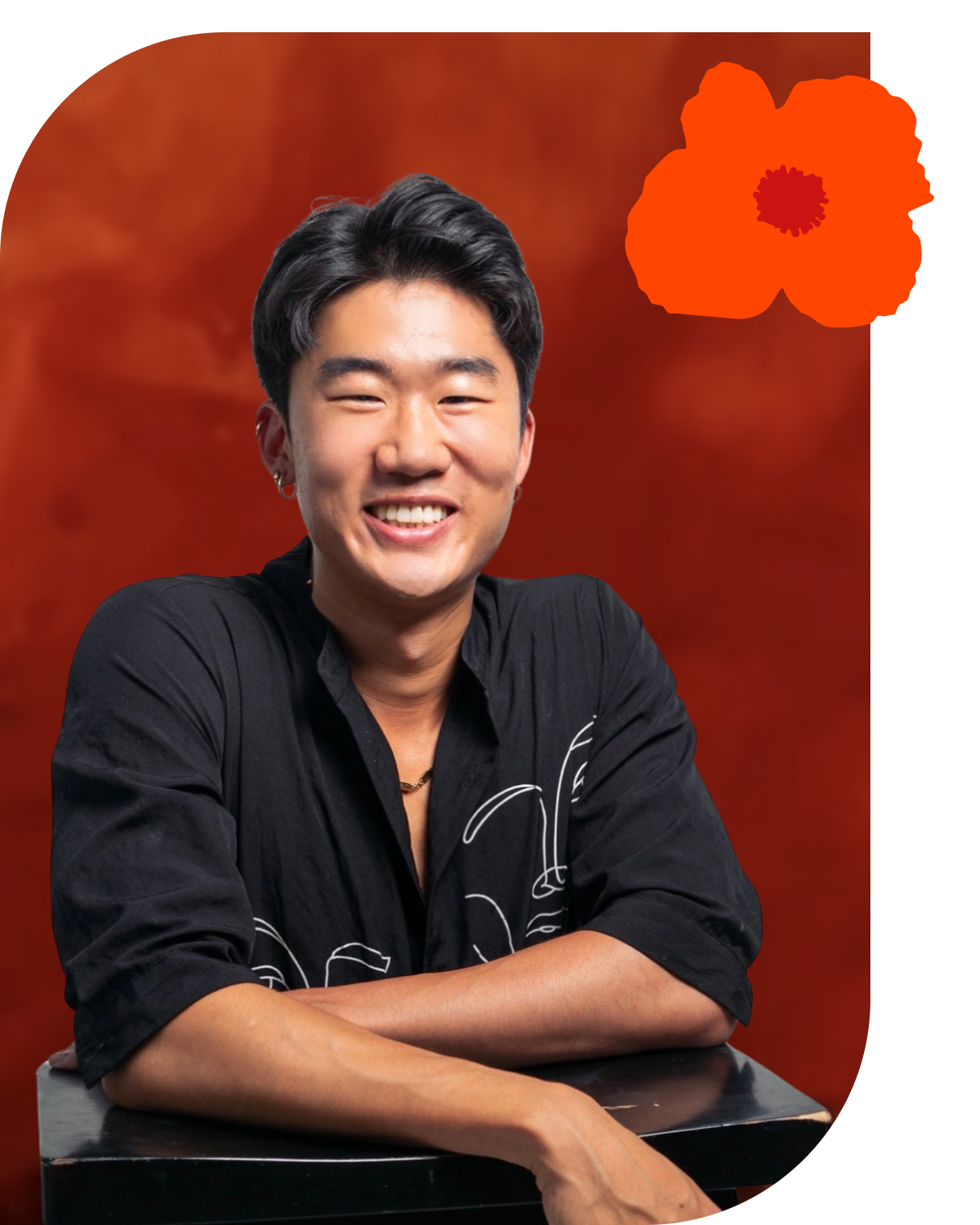
Max Chang, LMFT (he/him/his)
I am a clinical supervisor. I am an athlete. I am a therapist.
I am a client. I am a student. I’m a friend of Dorothy.
As a therapist, I approach my work recognizing the importance of how your internal experience interacts with the external world. As an immigrant, I practice with culture and intersectionality in mind, considering the multifaceted nature of your human experience. As an athlete, I recognize the importance of health when both the mind and body are aligned.
My practice is grounded in identifying what is getting in the way of how you want to live, while remaining dynamic and expansive in how we get there. I bring my clinical expertise as the guardrails for our work, while you bring the lived experience that gives our work direction and creates opportunities for change and growth.
My Approach

-
The work of therapy is an opportunity to practice relationships. Whether that be your relationship with a partner, friends, family members, or even yourself – therapy is a space where I invite you to look in the proverbial mirror and see the ways in which you choose to practice your relationships.
Maybe you’ve noticed the same arguments with your partner, the same anxiety before speaking up, or the same feeling that no matter what you accomplish, it never feels like enough.
Through awareness comes the ability to choose how you respond rather than react. My role is to help you build relationships that feel more intentional and aligned with your values.
The work of therapy is not easy. As a client, a student, and a clinician, I’ve learned that therapy is a practice that requires effort, repetition, and lots of deep breaths. Therapy asks for curiosity even when you’re faced with overwhelming feelings of doubt. Therapy pushes you to examine the ways in which you’ve learned how to love and be loved that no longer serve you.
Therapy is a practice of being.
My expectation of myself as your clinician is to bring my curiosity for all parts of you to the session: the part of you that struggles to love who you are outside of your accomplishments, the part of you fearful to do what you know is best for you, or simply the part of you eager to hear Beyoncé’s new album.
My hope for therapy is not to transform you into a different person, but rather to help you connect to your relationships in the way that serves you best.
-
Growing up, home was something that was constantly changing. From Canada to Shanghai, Los Angeles, Taiwan, and now Chicago, each move required rebuilding the community, adapting to different cultures, and redefining what belonging meant.
Whether it was the cautious excitement of unknowingly connecting with another queer person while living in Asia or the wistful melancholy of leaving behind a friendship for another country, navigating the highs and lows of relationships has always been at the forefront of my experience.
My lived experience reminds me that often there is not one way to be. I bring that perspective into my work by balancing clinical knowledge with humility, recognizing that every client is the expert on their own lived experience.
In my work with clients, my experiences remind me to slow down before making assumptions, remain curious about the many ways people experience grief, and recognize that emotional safety is something we build together over time.
In Los Angeles, I worked at the GLAAD Media Awards. Working there deepened my appreciation for storytelling and its impact on various communities. That experience reinforced my belief that stories shape the way we understand ourselves and each other. Seeing authentic LGBTQ+ stories shared on a larger stage reminded me how powerful it can be to feel seen.
Through storytelling, we have the opportunity to examine, understand, and rewrite narratives that no longer serve us while reconnecting with parts of ourselves we may have forgotten or never realized mattered.
-
Every Wednesday, I have an hourly vocal lesson with my beloved coach, Alex Newkirk. Through our time together, I’ve learned about the nuanced ways my voice can move when I pay attention to my body.
The initial lessons were highly uncomfortable. As a self-proclaimed “musical theatre kid,” I felt vulnerable facing the lack of control in my body when I moved to create sounds. While I had a grasp of fundamental music theory, any high note I considered out of range elicited instinctive panic in my body: I overinhale to prepare, my body tenses, throat locks, and a subsequent squeal leaves my mouth through sheer willpower.
It’s safe to say no recordings will be seeing the light of day from those early classes.
Through dedication and lots of reassurance from Alex, I’ve learned that while high notes are still hard to sing, they are within my reach. Alex taught me that singing is about finding relaxation in my body, supporting my voice through just enough breath, and positioning the space within my mouth that best allows the sound to be resonant.
To learn how my body sings best, I developed a connection with myself that was free of judgment. I replaced fear and criticism with curiosity by accepting all the melodies I vocalized to recognize what worked and what didn’t. I learned to trust that little adjustments in my body yielded big changes.
Unintentionally, my desire to sing “The Wizard and I” taught me the importance of tuning into my body and listening to myself with curiosity. I’m still learning how to reach the notes that once felt impossible, but now, instead of bracing myself for failure, I’m interested in finding out what my body needs to get there.
-
Trained as a systemic therapist, I see the world like a nesting doll. Your internal experience is shaped by your family, your family by your community, and your community by the broader systems around you. The ways we’re taught what is “right” or “wrong” often become the lens through which we understand ourselves. A quiet child raised in an extroverted family may grow up believing they’re shy, while the same temperament in a different family might be celebrated as thoughtfulness.
A central part of my therapeutic framework is helping clients zoom out and recognize how their environment has shaped their internal narrative. Rather than viewing who you are as inherently right or wrong, we explore how your ways of thinking, feeling, and responding developed as adaptations to help you survive and navigate your world.
When we face challenges, we often rely on the same survival strategies we learned growing up. Therapy is about recognizing those patterns, slowing them down, and creating space between the moment something happens and your instinctive reaction. In that space, you gain the opportunity to choose something different.
In that space is where the power of therapy lies.
Together, we explore what you’re feeling, why you’re drawn to respond the way you do, and we develop curiosity toward the behaviors you may dislike or feel ashamed of. Instead of asking, “What’s wrong with me?” we ask, “How has this behavior served me?” Understanding the function of these patterns is often the first step toward creating new ones.